
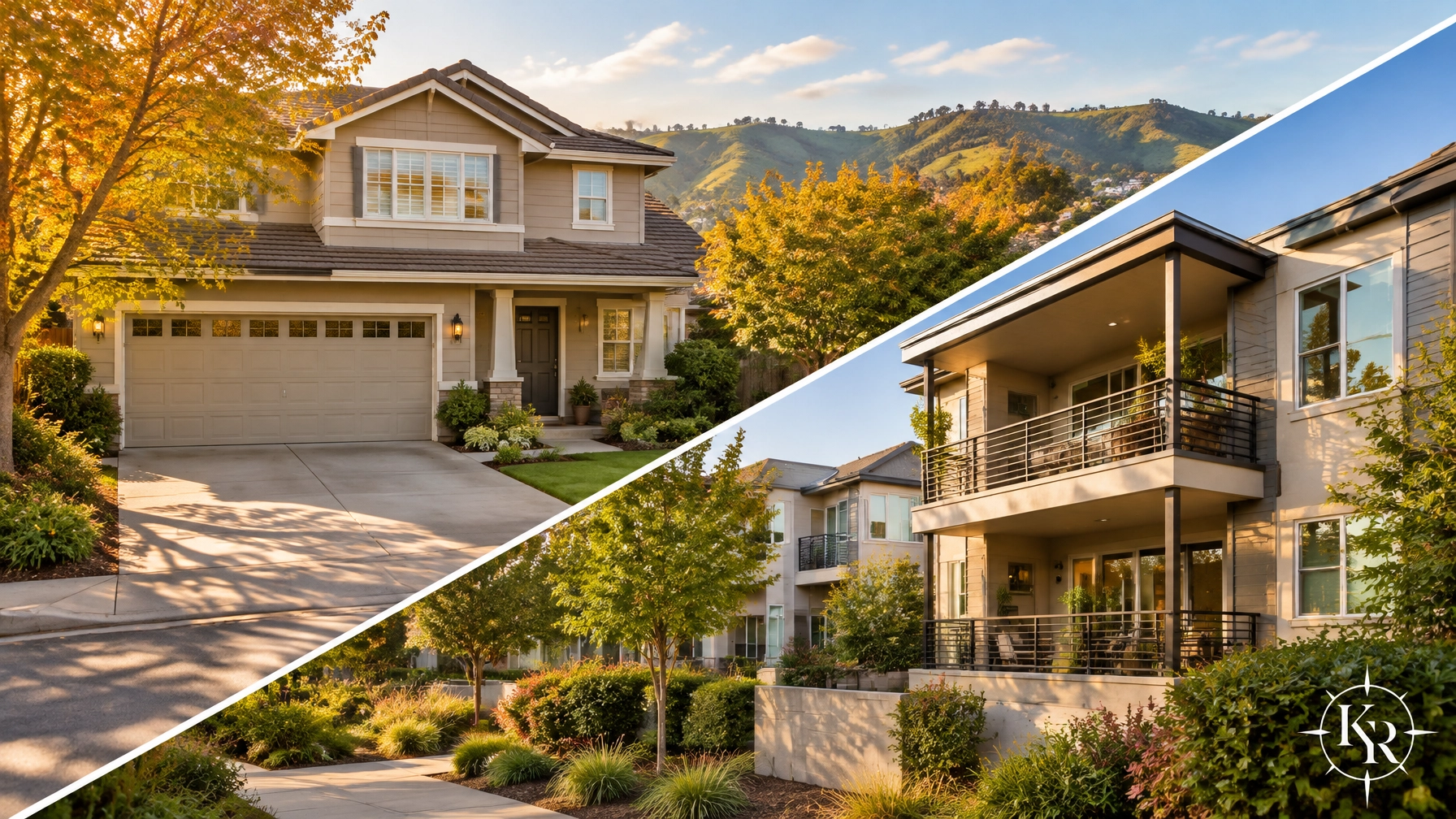
Castro Valley isn’t one single lifestyle, or one uniform real estate market. A home near downtown offers a different daily rhythm from a hillside property in Palomares Hills or a planned-community home in Five Canyons. Knowing those differences can help you focus your search, weigh tradeoffs, and make sense of the latest market numbers.
Here’s a pocket-by-pocket look at six areas, followed by a late-October 2026 market snapshot.
First, the market: competitive, but not one-size-fits-all
For the 30 days through October 22, Pocket Agent Pro reports 35 sales and 93 active listings in Castro Valley. The median sold price was $1,135,000, up 1.4% month over month. Homes sold for a median 102.9% of list price, and 68.6% closed above asking. Median time on market was 46 days, with 2.7 months of supply. The median price per square foot was $652.
There’s also evidence of room for negotiation. 35.5% of active listings had at least one price cut. That doesn’t mean every seller will accept a lower offer. It does show why it’s important to assess the specific home, its condition, and its competition rather than assume every listing will attract a bidding war.
These figures are a rolling market snapshot, not a guarantee of what a particular home will sell for. You can review the methodology and current figures on Pocket Agent Pro’s Castro Valley market page, and compare with the Realtor.com Castro Valley market page.
For another perspective, Zillow reported an average home value of $1,088,972 as of September 30, 2026, up 1.2% year over year, with homes going pending in about 17 days. These measures aren’t directly interchangeable: an average estimated value and a median of recent closed sales use different methods and time periods. Treat them as complementary context, not conflicting answers.
A pocket-by-pocket tour

Canyon: a more tucked-away, hillside feel
The Canyon pocket appeals if you’re drawn to a quieter setting, greenery, and the sense of living close to the hills. Streets and properties can feel more sheltered than the busier central corridor, though the experience varies with the exact address.
The tradeoff is convenience. Before you commit, test the drive to your regular destinations and check the specific property’s access, slope, drainage, and insurance considerations. A hillside atmosphere is a lifestyle benefit, but the lot and home deserve careful inspection.
Palomares Hills: planned-community comforts and views
Palomares Hills is often a fit for buyers who want a spacious residential setting, hillside scenery, and a more planned neighborhood feel. Home styles, views, lot shapes, and association details vary, so don’t treat the name as a promise of one standard experience.
If a property is part of a homeowners association, review the relevant documents, dues, rules, and maintenance responsibilities early. Also confirm school assignment directly for the address you’re considering. Boundaries and enrollment details matter more than a neighborhood label.
Five Canyons: amenities and a cohesive neighborhood setting
Five Canyons offers a planned-community character and access to shared amenities and nearby trails. That can be appealing if you value neighborhood recreation and a more coordinated setting.
Here, your comparison should go beyond square footage. Check the home’s phase and property type, the applicable HOA costs, and the condition of shared facilities. A townhouse, condominium, and detached home can carry different costs and responsibilities even within the same community.

Jensen Ranch: a residential pocket with a school connection
Jensen Ranch is often associated with Palomares Hills and may be worth exploring if you’re looking for a residential feel with access to neighborhood parks and schools. But don’t rely on a general map or listing language to establish the school for a particular home. Verify it with the district.
As you compare properties, pay attention to practical details: driveway and yard usability, the route to work or transit, and how much upkeep the lot requires. Those everyday factors can make a larger difference than a view or floor plan that looks appealing during a showing.
Stanton: established streets and a neighborhood feel
Stanton offers a more established residential character, with single-family homes and a less uniformly planned feel than some newer communities. Buyers who prefer a traditional neighborhood setting may find it worth including in a tour.
As with other pockets, home condition and location can shift the value considerably. Review inspection findings, permits for renovations, and the home’s site details. Confirm school assignment and compare recent sales for homes with similar size, condition, and lot characteristics, not simply the same broad neighborhood name.
Castro Valley Village and downtown: closer to daily conveniences
If you want to be near shops, restaurants, community events, and transit, downtown and the Castro Valley Village area deserve a look. Castro Valley Boulevard is a local activity hub, and the Castro Valley Marketplace hosts food and community events, including First Fridays.
On Saturdays, the farmers market operates at the Castro Valley BART station. Check the market’s current details before you go, since hours and arrangements can change.
A more central location can make errands and transit easier, but it may also mean more traffic, activity, or less separation from commercial areas. Visit at different times of day and consider what your routine will actually feel like.
Parks and community life beyond your block
Castro Valley’s appeal is shaped by more than housing. Lake Chabot Regional Park offers hiking, biking, fishing, and boating; swimming is not permitted in the lake. Don Castro Regional Recreation Area has a separate swim lagoon, but the lagoon is closed for the 2026 season and is expected to reopen in 2027. Check park updates before making plans.
You can also explore the Castro Valley Creek path near the library for a local stroll. The annual Rowell Ranch Rodeo adds another community tradition; check the official site for event dates. Chabot College is nearby in Hayward, rather than within Castro Valley itself, and can be a useful destination depending on your commute or community ties.
How to use the market numbers when you’re buying or selling
A median sale price is a useful starting point, not a pricing instruction. Two homes in the same pocket can differ substantially because of condition, views, lot, layout, renovations, and association costs.
If you’re buying, use the 46-day median as broad context, not a countdown clock. Some homes attract quick interest, while others sit and reduce their price. Review comparable sales, investigate the property carefully, and set a comfortable budget that includes taxes, insurance, maintenance, and any HOA dues.
If you’re selling, the above-list sale rate shows that buyers are still competing for some homes. However, the share of listings with price cuts is a reminder that presentation and pricing matter. A thoughtful launch grounded in relevant comparables can help you avoid testing the market too high and losing early momentum.
If you’re weighing Castro Valley against other parts of the region, our earlier Castro Valley overview offers broader context. For current regional trends, you can also visit Kindred Realty’s market data page.
Find the pocket that fits your day-to-day life
The best Castro Valley location is the one that fits your routines, budget, and priorities, not just the one with the most appealing listing photos. Tour more than one pocket if you can. Compare the commute, neighborhood activity, property condition, and total monthly cost.
If you’d like to talk through a move, sale, or relocation plan, contact Kindred Realty. A clear comparison of your options can make the next step feel more manageable.
Market data reflects the sources and dates cited above and may change. Verify property, school, association, insurance, and market details before making a real estate decision.