
SEO Meta Title: Downsizing in the East Bay | Selling Your Family Home
SEO Meta Description: Thinking about downsizing in the East Bay? Learn how to prepare, price, sell, declutter, manage tax considerations, and choose your next home with confidence.
Downsizing is more than moving into a smaller home. It is a significant transition involving your finances, belongings, routines, and memories.
You may be tired of maintaining rooms you rarely use. Perhaps the stairs, yardwork, property taxes, or repairs have become more burdensome. You may want to be closer to family, healthcare, public transportation, or a walkable downtown. Or you may simply be ready for a home that better fits the way you live today.
Whatever motivates your decision, thoughtful preparation can make the process calmer and more rewarding. Here is how to approach downsizing and selling a long-time East Bay home with clarity.
When Does Downsizing Make Sense?
Downsizing often becomes appealing when your current home no longer supports your priorities. The decision may be practical, financial, or emotional: or all three.
Consider downsizing if:
- You are paying to heat, cool, insure, and maintain more space than you need.
- Yardwork, exterior repairs, or home maintenance are becoming difficult.
- Your children have moved out and several rooms are rarely used.
- You want to reduce your mortgage or convert home equity into retirement funds.
- You would prefer a condominium, townhome, or single-level home.
- You want to be closer to family, services, cultural activities, or transit.
- You are considering an active-adult community such as Rossmoor in Walnut Creek.
- You want to simplify now rather than leave a large property and its contents for your family to manage later.
There is no universal “right time” to move. The right time is when the benefits of a new home outweigh the costs and emotional difficulty of leaving your current one.
A useful first step is to separate the home you love from the responsibilities it requires. Those are not always the same thing.
Choose the Right Next Home or Community
The best downsizing move is not necessarily the smallest property you can find. It is the home that fits your daily life, budget, health needs, and long-term plans.
Start by identifying your non-negotiables:
- One-level living or elevator access
- A manageable number of bedrooms and bathrooms
- Low-maintenance outdoor space
- Parking and guest access
- Proximity to family or medical care
- Public transportation and walkability
- Homeowners association services and fees
- Space for hobbies, visitors, or occasional family gatherings
- A comfortable monthly budget after taxes, insurance, utilities, and maintenance
Your ideal location may be closer than you think. A homeowner moving from a larger property in Oakland or Berkeley might consider a lower-maintenance condominium in Alameda, El Cerrito, or Richmond. Someone leaving a hillside home in Castro Valley may prefer a single-level property nearby, while a Walnut Creek homeowner may explore downtown condos or an active-adult community.
Each East Bay community offers a different balance:
- Alameda: Flat streets, established neighborhoods, and access to local shops and services.
- Oakland: Diverse housing options, cultural amenities, and neighborhoods ranging from urban to residential.
- Berkeley: Walkable areas, strong community identity, and proximity to dining, education, and transit.
- El Cerrito: Convenient BART access, hillside views, and a mix of single-family homes and condominiums.
- Richmond: A range of housing choices and waterfront, urban, and suburban settings.
- Walnut Creek: Downtown convenience, medical services, BART access, and active-adult options.
- Castro Valley: Established neighborhoods, regional parks, and a quieter setting with strong East Bay connectivity.
You can compare local lifestyle considerations through Kindred Realty’s Castro Valley neighborhood guide, Walnut Creek guide, and El Cerrito neighborhood guide.

Declutter Before You Prepare the Home
Decluttering is one of the most important: and often most emotional: steps in downsizing.
Do not try to empty the entire house in one weekend. Instead, work by category or room and make four decisions:
- Keep: Items you use, love, or genuinely need.
- Give: Belongings that family members or friends may value.
- Sell: Furniture, artwork, collectibles, or household goods with meaningful market value.
- Donate or discard: Items that no longer serve a purpose.
Start with easy areas such as linen closets, garages, storage rooms, and duplicate kitchen items. Leave highly emotional belongings until you have built momentum.
A few practical guidelines can help:
- Measure the rooms in your next home before keeping large furniture.
- Photograph sentimental items you cannot take with you.
- Ask family members to choose what they want by a specific date.
- Keep important documents, jewelry, medications, and personal records separate.
- Do not assume every collectible has significant resale value.
- Consider a professional estate-sale company for large or specialized collections.
- Allow extra time for donation pickups, hazardous-waste disposal, and recycling.
Decluttering is not about erasing your history. It is about deciding which parts of that history should move forward with you.
Prepare the Home Without Over-Improving
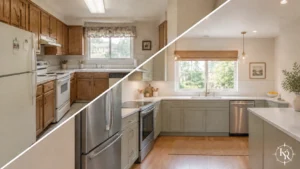
A long-time family home does not need to be completely remodeled before listing. The goal is to make the property clean, functional, and easy for buyers to understand.
Prioritize improvements that reduce uncertainty:
- Repair obvious leaks, broken fixtures, and damaged flooring.
- Improve lighting in dark rooms, hallways, and entryways.
- Touch up paint in high-traffic areas.
- Refresh landscaping and the front entry.
- Remove excess furniture so rooms feel more spacious.
- Organize permits, warranties, appliance records, and repair invoices.
- Address safety concerns such as loose railings or trip hazards.
- Discuss roof, foundation, drainage, and insurance issues early.

A pre-listing inspection may be useful, particularly if you have owned the property for decades or completed additions and renovations over time. It can help you identify issues before a buyer’s inspection creates last-minute stress.
Your real estate professional can help you compare the likely return of each improvement. Not every project will increase your sale price enough to justify its cost.
Price Realistically and Plan the Timing
The East Bay market is highly local. Pricing can vary substantially between neighborhoods, property types, school areas, lot configurations, and levels of preparation.
A realistic pricing strategy should consider:
- Recent closed sales: not just active listings
- Competing homes currently on the market
- The property’s condition and layout
- Location, views, parking, and outdoor space
- Buyer demand for condos, townhomes, and single-family homes
- Current financing and insurance conditions
- The time of year and your preferred moving schedule
Overpricing can be especially costly when downsizing. A home that sits on the market may require repeated showings, price adjustments, and extended maintenance while you are already preparing for your next move.
However, speed should not be the only goal. A carefully planned launch may be preferable if you need time to declutter, coordinate a purchase, or arrange temporary housing.
An experienced East Bay real estate agent can help you evaluate different scenarios:
- Sell first, then purchase.
- Purchase first, then sell.
- Use a rent-back agreement.
- Arrange temporary housing.
- Coordinate the sale with a move to another East Bay community.
- Sell in current condition rather than completing extensive improvements.
The best strategy depends on your equity, financing, timing, and comfort with uncertainty.
Review Tax and Financial Considerations Early
Tax rules can materially affect your net proceeds. Before listing, discuss your situation with a qualified CPA, tax advisor, financial planner, or estate-planning attorney.
For a primary residence, the IRS generally allows eligible sellers to exclude up to $250,000 of gain for single filers or $500,000 for married couples filing jointly, subject to ownership, residence, and other requirements. The IRS Publication 523 explains the rules in detail, while the California Franchise Tax Board provides state-specific guidance.
Your potential gain is not simply the difference between your purchase price and sale price. Your advisor may need to consider:
- Selling expenses
- Major improvements that remain part of the property
- Depreciation from rental or business use
- Previous home-sale exclusions
- Ownership structure and trust documents
- Whether you received a Form 1099-S
If you are age 55 or older, California’s Proposition 19 may also be relevant. Qualifying homeowners may be able to transfer their property-tax base to a replacement primary residence anywhere in California, subject to timing, value, filing, and other requirements. The California State Board of Equalization’s Proposition 19 guidance should be reviewed with your tax or legal professional.
Do not make a sale or inheritance decision based on a general online summary. Your purchase history, family structure, trust, rental use, and future plans all matter.
Downsizing and Moving Checklist
Use this checklist to keep the process manageable:
Three to six months before listing
- Define your next-home priorities.
- Estimate your sale proceeds and purchase budget.
- Meet with your tax and financial professionals.
- Review trust, estate, and title documents.
- Begin decluttering room by room.
- Gather records for improvements and repairs.
- Interview real estate professionals and movers.
One to three months before listing
- Complete agreed-upon repairs.
- Schedule an estate sale or donation pickups.
- Arrange storage only if it serves a clear purpose.
- Confirm your moving budget and preferred dates.
- Discuss staging, photography, and launch timing.
- Review insurance availability for the current and replacement home.
After accepting an offer
- Keep essential documents and valuables with you.
- Confirm escrow, inspection, appraisal, and contingency deadlines.
- Coordinate movers and utility transfers.
- Arrange temporary housing if needed.
- Leave manuals, keys, remotes, and property information for the buyer.
- Keep records of final expenses for your tax advisor.
Give Yourself Space for the Emotional Transition
Leaving a long-time family home can bring relief and grief at the same time. That combination is normal.
You may miss the kitchen where holidays happened, the backyard where children played, or the hallway marked by years of family photographs. Selling does not diminish those memories. It simply changes where your next chapter takes place.
Consider creating a transition ritual:
- Take photographs of meaningful rooms and views.
- Invite family members for one final gathering.
- Write down stories connected to the home.
- Keep a small, intentional collection of heirlooms.
- Visit the new neighborhood before committing.
- Allow yourself time to feel uncertain.
Downsizing works best when it is treated as a thoughtful move toward something: not merely an escape from maintenance.

A Calmer Way to Begin Selling Your East Bay Home
Selling a home in the East Bay after many years can feel overwhelming, especially when the property holds financial value and deep personal meaning. Preparation gives you options.
Start with a conversation about your goals, not a commitment to list. Kindred Realty can help you evaluate your home’s likely market position, compare East Bay communities, think through timing, and coordinate the practical pieces of a move. Jeff and Mikayla bring a multi-generational perspective, responsive communication, and a family-centered approach to each client’s decision.
When you are ready, you can contact Kindred Realty for a downsizing consultation. A clear plan can help you move forward with less stress and more confidence.